
Winning in competitive gaming isn’t just about aim, mechanics, or perfect loadouts. It’s about how well a team functions under pressure. If you’re here, you’re likely looking to understand how to handle team disputes, miscommunication, and high-stakes tension without derailing performance. This article breaks down exactly how esports conflict resolution works in real competitive environments—and how to apply it to your own squad.
We’ll explore why conflicts happen in the first place, how they impact in-game decision-making, and the practical strategies top teams use to reset momentum and rebuild trust mid-season. From shot-calling disagreements to role clashes and tilt management, you’ll get actionable frameworks you can implement immediately.
Our insights are grounded in competitive match analysis, team dynamics research, and proven coordination strategies used across high-level play. If your goal is stronger communication, tighter teamwork, and more consistent results, you’re in the right place.
Team disputes rarely explode out of nowhere. They start with missed callouts, bruised egos, and that one teammate who insists the loss was “lag.” We’ve all felt the tilt when comms turn toxic and scrims become silent treatment. Unspoken resentment is a roster’s silent killer. Some players claim conflict is just passion, that shouting proves you care. But unchecked friction fractures trust and sabotages strategy. Effective esports conflict resolution demands pausing, clarifying roles, and separating feedback from personal attacks. Address issues post-match, set clear expectations, and revisit goals together. It sounds basic, yet ignoring it is how promising squads collapse.
The Anatomy of Conflict: Identifying the Root Causes of Team Friction
Conflict in competitive teams rarely appears out of nowhere. It’s usually a symptom of deeper structural issues—and learning to spot them gives you a massive edge. When you understand the anatomy of friction, you gain cleaner comms, tighter coordination, and more consistent wins (which is what everyone actually wants).
Performance-Based Disputes often explode during high-pressure moments. A mistimed rotation in a MOBA, two players making conflicting shot-calls in a tactical FPS, or a support burning utility too early can derail an entire round. These breakdowns usually stem from unclear hierarchy or undefined win conditions. The upside? When roles and calls are clarified beforehand, teams react faster and tilt less.
Personality Clashes are inevitable. The “Aggressive Rusher” wants to push every advantage; the “Methodical Strategist” prefers map control and patience. Neither is wrong—they’re operating from different risk calculations. Defining playstyle expectations before matches transforms friction into adaptability. (Think buddy-cop movie energy, but with better comms.)
External Pressures like streaming expectations, prize pools, or tournament brackets amplify emotional responses. Stress narrows focus and shortens tempers. Acknowledging these pressures openly builds psychological safety—an underrated performance multiplier supported by team dynamics research (Edmondson, 2018).
Resource and Role Conflicts are classic flashpoints:
- Arguing over weapon claims in an FPS
- Fighting for jungle farm priority in a MOBA
- Disputing who gets carry resources
Clear allocation rules prevent resentment and optimize efficiency.
Mastering esports conflict resolution doesn’t just reduce drama—it sharpens execution. When friction becomes feedback instead of fallout, your squad levels up in both skill and trust.
In-Game Resolution: Real-Time Tactics for De-escalation
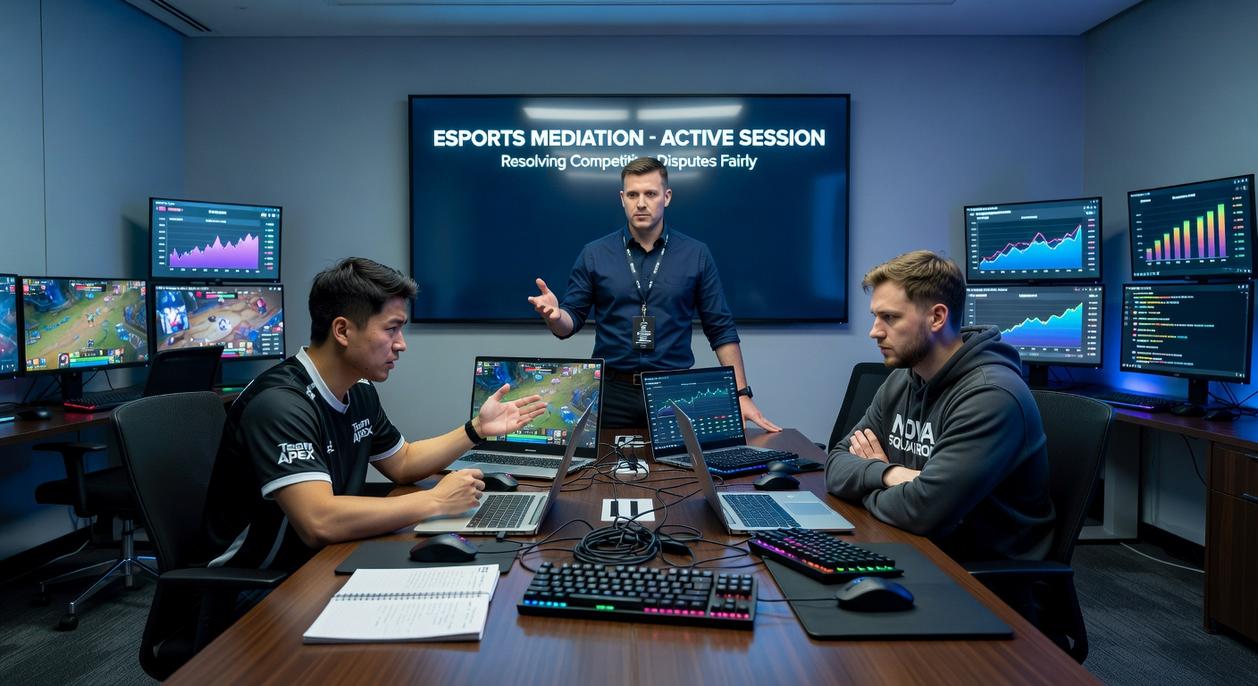
Tilt doesn’t lose games—UNRESOLVED CONFLICT does. In high-pressure matches, seconds matter. The goal isn’t to eliminate disagreement; it’s to control it before it controls your round.
The “Reset” Callout
A “Reset” callout is a universal team codeword that instantly pauses an argument and redirects focus to the current objective. Think of it as a mental tactical timeout (no referee required). The moment voices spike or blame creeps in, anyone can say “Reset.” That means: drop the debate, state enemy info, confirm utility, move.
Real-world example: two players arguing about a missed trade in Valorant. One says “Reset.” Immediately: “3v2. Spike down. Play crossfire.” Argument shelved, round salvaged.
Some argue this suppresses healthy communication. Fair point. But timing matters. Mid-round is for execution, not analysis. Save the philosophy for later.
The Chain of Command Protocol
An IGL (in-game leader) is the designated shot-caller with final authority on contested plays. This isn’t dictatorship—it’s decision velocity. When teams hesitate, they lose to decisive opponents (see nearly any pro CS:GO comeback).
If two teammates disagree on rotating, the IGL makes the call. Everyone commits. Paralysis is worse than a wrong move executed together.
If your squad lacks this structure, start with clear roles and study effective team communication strategies for online squads: https://hmcdgamers.com/effective-team-communication-strategies-for-online-squads/
Focus on Actionable Feedback
Blame freezes progress. Strategy builds it.
Before: “Why did you push that?”
After: “Next time, wait for my flash before swinging.”
Before: “You never watch flank.”
After: “Let’s assign flank watch before we exec.”
This shift is core to esports conflict resolution—turn emotion into adjustment.
Table It for the VOD Review
Some arguments cannot be solved mid-match. Use the phrase: “Let’s check the VOD after.” A VOD (Video on Demand replay) allows objective review instead of memory-based accusations.
What’s next? Build a 10-minute post-match ritual: clip key rounds, review calmly, assign one improvement per player. Conflict handled. Chemistry preserved. Momentum intact.
Losses sting. Anyone who says otherwise hasn’t queued into a ranked final and watched the scoreboard burn. In my experience, the first 15 minutes after a defeat are the WORST time to talk strategy. Emotions spike, mics crackle, and every comment feels personal. Mandate a short cool-down. Step away. Hydrate. Breathe. You’re not dodging accountability; you’re protecting clarity.
When the team regroups, move into a structured VOD review. That means focusing on the what and the how, not the who. Here’s the simple framework I swear by:
• Identify the problem play.
• Discuss the intended outcome.
• Brainstorm alternative strategies.
Notice what’s missing? Names. Blame is lazy analysis. Objective review is harder, but it’s how real improvement happens.
Some players argue that calling someone out directly builds toughness. I disagree. Without a No Blame rule, people hide mistakes, and hidden mistakes metastasize. The goal is collective growth, not a scapegoat. This is basic esports conflict resolution, and it works because it lowers defensiveness and raises honesty.
Finally, end with concrete takeaways. Not vibes. Not “we’ll be better.” Define two or three actions for the next scrim: adjust default positioning, refine ultimate tracking, tighten comms timing. Write them down. Revisit them.
A loss can fracture a roster—or forge it. The difference is structure. Debrief with intention, protect trust, and turn frustration into fuel. THAT’S how cohesion is built.
Treat every setback as data, not drama, and your team will evolve faster than the competition expects. Consistency compounds into championships. Period.
Conflict in competitive gaming is inevitable; chaos is optional. What most squads miss isn’t passion, but process. That’s where structured esports conflict resolution separates average teams from title contenders.
First, install clear communication protocols—who speaks, when, and how long. Then transition into objective post-match reviews driven by clips and stats, not vibes (yes, even if someone swears they were “lagging”). Over time, this builds resilience under pressure, like a scrim-tested Avengers lineup.
Start small. Introduce a single tactic—the “Reset” callout—next session. Consistency compounds, and soon friction becomes fuel for smarter plays and tighter coordination when stakes are highest in competition.
Take Control of Your Team’s Competitive Edge
You came here looking for real solutions to in-game tension, miscommunication, and performance breakdowns. Now you understand how structured communication, defined roles, and smart leadership directly impact team chemistry and results. Most squads don’t lose because of mechanics—they lose because conflict goes unmanaged and strategies fall apart under pressure.
Left unchecked, frustration turns into tilted gameplay, broken coordination, and missed opportunities in clutch moments. That’s why mastering esports conflict resolution isn’t optional—it’s a competitive advantage.
Here’s your next move: implement structured callouts, define clear in-game leadership, and run post-match reviews focused on solutions—not blame. Top competitive teams rely on proven coordination systems to stay sharp under pressure, and the highest-rated strategy platforms consistently emphasize structured squad frameworks for measurable improvement.
If you’re serious about winning more matches and eliminating avoidable losses, start applying these tactics in your next scrim. Tighten communication. Refine your loadouts. Hold your team accountable. The difference between average and elite starts with how you handle pressure—so take control now.
 Thero Dornhaven has opinions about gamer squad coordination tactics. Informed ones, backed by real experience — but opinions nonetheless, and they doesn't try to disguise them as neutral observation. They thinks a lot of what gets written about Gamer Squad Coordination Tactics, Loadout Optimization Guides, Expert Breakdowns is either too cautious to be useful or too confident to be credible, and they's work tends to sit deliberately in the space between those two failure modes.
Reading Thero's pieces, you get the sense of someone who has thought about this stuff seriously and arrived at actual conclusions — not just collected a range of perspectives and declined to pick one. That can be uncomfortable when they lands on something you disagree with. It's also why the writing is worth engaging with. Thero isn't interested in telling people what they want to hear. They is interested in telling them what they actually thinks, with enough reasoning behind it that you can push back if you want to. That kind of intellectual honesty is rarer than it should be.
What Thero is best at is the moment when a familiar topic reveals something unexpected — when the conventional wisdom turns out to be slightly off, or when a small shift in framing changes everything. They finds those moments consistently, which is why they's work tends to generate real discussion rather than just passive agreement.
Thero Dornhaven has opinions about gamer squad coordination tactics. Informed ones, backed by real experience — but opinions nonetheless, and they doesn't try to disguise them as neutral observation. They thinks a lot of what gets written about Gamer Squad Coordination Tactics, Loadout Optimization Guides, Expert Breakdowns is either too cautious to be useful or too confident to be credible, and they's work tends to sit deliberately in the space between those two failure modes.
Reading Thero's pieces, you get the sense of someone who has thought about this stuff seriously and arrived at actual conclusions — not just collected a range of perspectives and declined to pick one. That can be uncomfortable when they lands on something you disagree with. It's also why the writing is worth engaging with. Thero isn't interested in telling people what they want to hear. They is interested in telling them what they actually thinks, with enough reasoning behind it that you can push back if you want to. That kind of intellectual honesty is rarer than it should be.
What Thero is best at is the moment when a familiar topic reveals something unexpected — when the conventional wisdom turns out to be slightly off, or when a small shift in framing changes everything. They finds those moments consistently, which is why they's work tends to generate real discussion rather than just passive agreement.