
If you’re here, you’re looking for more than surface-level gaming advice. You want clear mechanics, smarter strategies, and practical insights you can apply immediately—whether you’re grinding ranked, refining your squad play, or mastering role specialization in esports.
This article breaks down the core systems that actually decide matches: positioning, timing, loadout efficiency, communication structure, and high-impact decision-making under pressure. Instead of generic tips, you’ll get structured guidance built around how competitive games are really played at higher levels.
We base our insights on deep analysis of competitive play, studying meta shifts, team coordination patterns, and proven tactical frameworks used in organized matches. Every recommendation is grounded in practical application—what works in real scenarios, not just theory.
By the end, you’ll understand how to optimize your loadouts, sharpen your mechanical consistency, coordinate more effectively with your squad, and make smarter in-game adjustments that translate directly into wins.
Raw aim wins duels; structure wins championships.
Many amateurs grind mechanics, believing highlight-reel plays carry teams. Pros know better: coordinated systems outperform solo heroics, like the Avengers assembling instead of freelancing.
The difference lies in defined roles.
Consider this side-by-side breakdown:
- Entry Fragger vs. Support: one creates space through calculated aggression; the other enables with utility, intel, and clutch saves.
- Shotcaller vs. Slayer: one processes macro strategy under pressure; the other executes micro fights flawlessly.
Understanding role specialization in esports reframes practice: sharpen your niche, sync with teammates, and measure impact beyond K/D. Championships demand collective precision. Relentlessly.
The Architect: Understanding the In-Game Leader (IGL)
Every great squad has a mastermind. In competitive titles, that’s the In-Game Leader (IGL)—the strategic architect who designs the blueprint before the match and rewrites it mid-firefight. Think chess grandmaster, but with a ticking bomb timer.
At a high level, the IGL handles:
- Pre-match strategy and mid-round shot-calling (real-time decision-making)
- Economy tracking and resource allocation
- Ultimate and cooldown coordination
- Rotations and rapid adaptations to enemy reads
Some argue raw mechanical skill matters more than leadership. I disagree. Mechanics win duels; leadership wins tournaments. Without clear calls, even cracked aimers hesitate—and hesitation loses rounds.
An elite IGL must stay calm under pressure (even when everything’s on fire), maintain encyclopedic meta knowledge, and communicate with ruthless clarity. This is where role specialization in esports becomes critical: when everyone trusts the IGL’s voice, five individuals move like one organism.
In my view, a great IGL multiplies talent. A weak one fragments it. The difference isn’t subtle—it’s the gap between controlled aggression and chaotic scrambling. And in competitive play, chaos rarely wins.
The entry fragger is the tip of the spear in any tactical shooter. Like a battering ram slamming into a castle gate, their job is to hit first and hit hard.
Primary Function: Create space by taking the opening duel and cracking a bombsite wide open. When they fall, they should fall forward, traded instantly by teammates. (Think of them as the action hero who dives through the window so the squad can follow.)
Key Responsibilities:
- Initiate fights without hesitation
- Gather information with their life if necessary
- Disrupt defensive setups
This aggressive posture embodies role specialization in esports, where each player becomes a tool in a larger machine.
Required Mindset: Fearless, decisive, and mechanically sharp. A flashy kill/death ratio is optional; round impact is not.
Loadout Archetype: High-mobility agents and close-quarters weapons that let them burst in like lightning, striking before thunder arrives.
Pro tip: pair them with utility that blinds or smokes angles to turn chaos into controlled momentum.
Without them, attacks stall like traffic at a broken intersection. Momentum dies before it starts.
The Unsung Hero: How Support Players Win Games
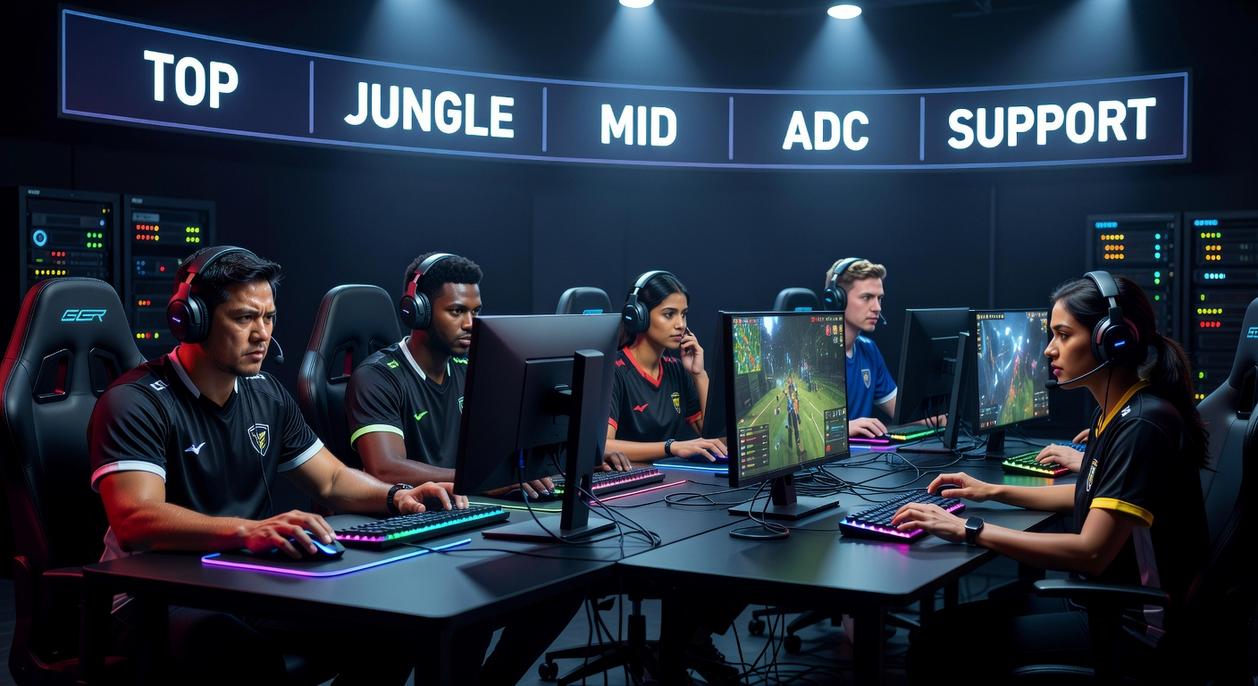
Support players don’t always top the scoreboard—but they WIN GAMES.
Their primary function is simple: make everyone else better. In practice, that means healing, throwing smoke grenades, flashing chokepoints, gathering intel, or locking down a site so the Entry Fragger can push safely. (Yes, you’re the reason that flashy triple kill happened.)
In role specialization in esports, support is the backbone. While fraggers chase eliminations, you manage timing, spacing, and utility economy.
Key responsibilities include:
- Assisting the Entry Fragger with perfectly timed utility
- Controlling sightlines to deny enemy info
- Playing disciplined post-plant or anchor positions
Some argue support is “easy” because it’s less mechanical. That’s misleading. Smart utility requires HIGH GAME IQ and map awareness—think of it like being the stage crew in a Marvel fight scene. No crew, no spectacle.
If you want to elevate your squad coordination, study shot calling 101 leading your squad to victory.
Measured by team success—not K/D—support players are the glue. Without them, aggression collapses and defenses crumble.
Mastering the lurker position is, in my view, the purest test of game sense. It demands patience that most aggressive players simply don’t have. While your squad executes, you operate separately, gathering intel on rotations and waiting for the perfect flank. Some argue lurking is selfish, that it risks a 4v5 if you mistime it. I disagree. When done right, it dismantles strategies like a chess move three turns ahead. That’s the beauty of role specialization in esports: independence with intention. A great lurker listens to footsteps, manipulates sound cues, and creates pressure across the map. Then—strike. Think Solid Snake in a bombsite. Pro tip: reposition after every kill; predict the trade. It’s a high-risk art, but when timed perfectly, it feels like controlling the entire server. Because timing separates ghosts from liabilities, and hesitation is the difference between genius and a costly respawn screen. Patience wins more rounds. Consistently.
The Game Changer: The High-Impact AWPer and Carry
The AWPer or Carry is the player who turns resources into results. Think of them as the team’s queen in chess—high value, high impact, and a prime target. Their primary job is simple in theory: hold long sightlines, secure opening picks, and convert economic leads into round wins. In practice, that means disciplined positioning and ice-cold aim.
First, communicate early. Call your angle, request utility, and avoid ego peeks. Next, manage the economy: if you lose the sniper, suggest a partial save so you can rebuy next round (pro tip: never force if it delays your power spike).
Some argue spreading resources is safer. However, role specialization in esports proves concentrated firepower often wins championships. Precision plus pressure wins games.
Synergy Over Solo Plays means recognizing that 1) IGL, 2) Entry, 3) Support, 4) Lurker, and 5) Carry each anchor a winning formula. The best rosters aren’t five MVPs chasing clips (we’ve all seen that ranked chaos); they’re balanced systems built on role specialization in esports. An IGL brings structure, an Entry creates space, Support sustains momentum, Lurkers apply pressure, and a Carry converts advantages. Complementary skills beat raw mechanics. Some argue talent alone carries games. Sometimes it does—briefly. But synergy scales. Analyze your instincts, communication style, and clutch tolerance, then drill the micro-skills your role demands daily.
To achieve true synergy in a gaming team, understanding role specialization not only enhances gameplay effectiveness but also paves the way for mastering advanced tactics, such as the map control strategies outlined in our article on tactical shooters – for more details, check out our Advanced Map Control Strategies for Tactical Shooters.
Dominate Your Next Match With Smarter Strategy
You came here to sharpen your competitive edge and gain clarity on what truly separates average players from elite performers. Now you understand how role specialization in esports impacts team efficiency, decision-making speed, and overall match outcomes.
When roles are unclear, rotations break down, resources are wasted, and team fights fall apart. That frustration—missed timings, poor coordination, inconsistent results—is exactly what structured strategy and optimized loadouts are designed to eliminate.
The fix is simple: commit to defined roles, refine your loadouts around team objectives, and practice coordinated execution instead of solo mechanics. Review your last matches, identify breakdown points, and adjust your squad strategy accordingly.
If you’re serious about climbing ranks and winning consistently, don’t leave improvement to guesswork. Get expert breakdowns, proven competitive play strategies, and advanced squad coordination insights trusted by thousands of dedicated players. Start optimizing your gameplay today and turn every match into a calculated win.
 Thero Dornhaven has opinions about gamer squad coordination tactics. Informed ones, backed by real experience — but opinions nonetheless, and they doesn't try to disguise them as neutral observation. They thinks a lot of what gets written about Gamer Squad Coordination Tactics, Loadout Optimization Guides, Expert Breakdowns is either too cautious to be useful or too confident to be credible, and they's work tends to sit deliberately in the space between those two failure modes.
Reading Thero's pieces, you get the sense of someone who has thought about this stuff seriously and arrived at actual conclusions — not just collected a range of perspectives and declined to pick one. That can be uncomfortable when they lands on something you disagree with. It's also why the writing is worth engaging with. Thero isn't interested in telling people what they want to hear. They is interested in telling them what they actually thinks, with enough reasoning behind it that you can push back if you want to. That kind of intellectual honesty is rarer than it should be.
What Thero is best at is the moment when a familiar topic reveals something unexpected — when the conventional wisdom turns out to be slightly off, or when a small shift in framing changes everything. They finds those moments consistently, which is why they's work tends to generate real discussion rather than just passive agreement.
Thero Dornhaven has opinions about gamer squad coordination tactics. Informed ones, backed by real experience — but opinions nonetheless, and they doesn't try to disguise them as neutral observation. They thinks a lot of what gets written about Gamer Squad Coordination Tactics, Loadout Optimization Guides, Expert Breakdowns is either too cautious to be useful or too confident to be credible, and they's work tends to sit deliberately in the space between those two failure modes.
Reading Thero's pieces, you get the sense of someone who has thought about this stuff seriously and arrived at actual conclusions — not just collected a range of perspectives and declined to pick one. That can be uncomfortable when they lands on something you disagree with. It's also why the writing is worth engaging with. Thero isn't interested in telling people what they want to hear. They is interested in telling them what they actually thinks, with enough reasoning behind it that you can push back if you want to. That kind of intellectual honesty is rarer than it should be.
What Thero is best at is the moment when a familiar topic reveals something unexpected — when the conventional wisdom turns out to be slightly off, or when a small shift in framing changes everything. They finds those moments consistently, which is why they's work tends to generate real discussion rather than just passive agreement.