Ever been yanked from a game by the real world? It’s jarring, right? That break in immersion is what we’re tackling today.
We’re diving deep into what makes an experience truly immersive (beyond the marketing fluff). I’ve spent years dissecting game mechanics and tech, from audio design to squad communication. Trust me, I know my stuff.
We’ll explore what defines virtual reality gaming and how to boost your setup. Expect clear takeaways and actionable steps. By the end, you’ll have a solid understanding and practical ways to boost your own game immersion.
Ready for a deeper dive? Let’s get started.
The Three Pillars of Immersion: Beyond the Screen
Immersion in virtual reality gaming isn’t just about shiny graphics. It’s about feeling like you’ve stepped into another world, where every sense is tricked and every decision matters. Let’s break it down.
First, sensory immersion is key. High-fidelity audio and visuals can fool your brain into thinking you’re really there. Sure, stunning graphics are great, but it’s the little details like realistic soundscapes and consistent aesthetics that truly pull you in.
Think about the last time you were so absorbed that you forgot you were staring at a screen.
Next, there’s psychological immersion. This is where the magic happens. A gripping narrative that offers meaningful choices can make all the difference.
You aren’t just watching a story unfold; you’re in it, shaping it. When your choices matter and the challenges feel just right, you’re hooked. Remember the time you agonized over a decision in a game?
That’s psychological immersion at work.
Finally, let’s talk about social immersion. This is where shared experiences come in. Coordinated teamwork and believable NPCs make the world feel alive.
When you’re working with others, it feels real. Ever been in an intense game and felt like your squad was right there with you? That’s because they (and you) were truly invested.
For a deeper dive into how these immersive experiences stack up against real-world competition, check out the Esports Vs Traditional Sports Showdown.
Immersion is more than sight and sound; it’s living the game. And that’s what makes virtual reality gaming so compelling.
The Gear That Gets You There: Hardware’s Role in Building Your
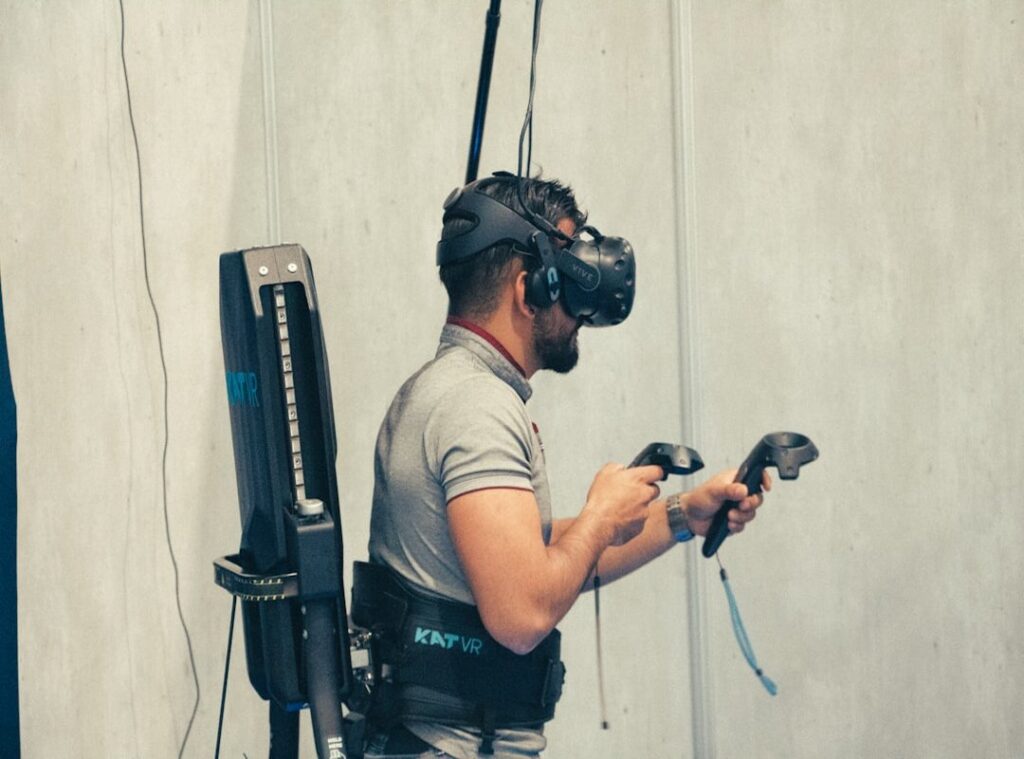
Let’s get real. In virtual reality gaming, gear isn’t everything, but the right hardware can make a world of difference. When I first strapped on a VR headset, I was clueless.
I mean, waving a controller around? It felt like I was learning to juggle all over again. But then came 1:1 head and hand tracking.
Suddenly, my physical actions matched the in-game results. No more fumbling with buttons. Just pure, smooth immersion.
And don’t even get me started on audio. A quality pair of headphones is like strapping a 3D soundscape to your ears. It’s not just about hearing footsteps.
It’s about feeling them, sensing that subtle creak behind you in a horror game. Ever felt your heart race because of sound alone? That’s the magic of spatial and high-fidelity audio.
It connects you emotionally to the game, pulling you deeper into the experience.
Speaking of connection, modern haptics (think PS5’s DualSense) are a game-changer. Feeling the tension of a bowstring or the texture of a surface? It’s not just cool, it’s big.
It physically ties you to the game world, making every interaction more real. You’re not just playing; you’re living it.
And let’s talk visuals. High-resolution, high-refresh-rate, and HDR displays aren’t just about pretty pictures. They’re about creating a visual window that your eyes accept as reality.
A smoother image keeps you in the game longer without fatigue. You want believability? This is how you get it.
So, is it worth investing in great gear? Absolutely. If you’re diving into all virtual reality, you want the best experience possible.
Don’t skimp on hardware. It’s your gateway to another world. And trust me, once you’ve tasted true immersion, there’s no going back.
Disappearing Act: Crafting Immersive Worlds
Have you ever felt truly lost in a game? Not lost like you can’t find the next quest marker, but lost in its world? That’s the magic of immersive design.

Developers shift focus from what you buy to what they build. It’s not just about fancy graphics or shiny new weapons. It’s about creating worlds that feel alive.
Take “The Elder Scrolls” or “Elden Ring.” These games are packed with lore that makes exploration thrilling. You’re not just collecting items; you’re uncovering a history. A rich history that underpins the game makes every discovery meaningful.
It’s like finding yourself in a living, breathing universe. Who doesn’t love digging up old secrets?
Then there’s the minimalist UI. Ever noticed how in “Dead Space,” your health meter is on Isaac’s suit? It’s not cluttering your screen.
This diegetic UI keeps your focus where it belongs: on the game, not on a bunch of distracting meters.
Environmental storytelling is another genius move. You stumble upon a skeleton next to a locked safe. No dialogue needed.
The story unfolds in your head. It’s clever, it’s subtle, and it pulls you deeper into the world without a word being spoken.
Reactive AI and changing systems add layers too. Day turns to night, weather changes, and the world doesn’t stop when you do. It makes you feel like a visitor, not the center of the universe.
It’s what makes virtual reality gaming more than a buzzword. It’s an experience.
And speaking of future experiences, the cloud gaming future is reshaping how we engage with these worlds. Developers are crafting worlds for you to disappear into. It’s not about selling a product.
It’s about building a universe where you can lose yourself. If that’s not magic, what is?
Taking Control: Your Immersive Escape Plan
Let’s talk about virtual reality gaming. It’s a beast that demands your full attention, and you can shape that experience. Start by curating your physical space.
Dimming the lights and silencing your phone are simple ways to build a distraction-free zone. Sounds basic, right? But they’re key steps to block out reality (the bad kind).
Dive into your settings next. Spend quality time tweaking audio and visuals. HDR settings and audio mixes (headphones or speakers) can make or break your reality.
And seriously, does anyone actually like motion blur? If it kills your vibe, turn it off. Game settings aren’t just a geek’s playground.
They’re your toolkit for immersion.
Mindset is key too. Embrace your role. Engage with the story.
Read those in-game books, make choices that fit your style, and don’t just rush the main quests. It’s about living in that world, not just passing through.
Finally, never underestimate the power of your squad. Clear communication and tactics create moments where your group feels like one unit. It’s not just gaming; it’s a shared experience.
We’re talking about unforgettable moments when you’re in sync (and nothing’s sweeter).
Dive Into the Game World
Feeling disconnected from your games? You’re not alone. True immersion isn’t just about having the latest gear.
It’s about blending new tech with clever game design and your own active engagement. Virtual reality gaming can bridge that gap. You can hit that ‘flow’ state more often if you understand these pillars. Start tonight.
Take one tip from the article and apply it. Want more? Check out other guides to improve your settings and team strategies.
You’re closer to the ultimate gaming experience than you think. So why wait? Dive in and feel the difference.
Your gaming world awaits.
 Thero Dornhaven has opinions about gamer squad coordination tactics. Informed ones, backed by real experience — but opinions nonetheless, and they doesn't try to disguise them as neutral observation. They thinks a lot of what gets written about Gamer Squad Coordination Tactics, Loadout Optimization Guides, Expert Breakdowns is either too cautious to be useful or too confident to be credible, and they's work tends to sit deliberately in the space between those two failure modes.
Reading Thero's pieces, you get the sense of someone who has thought about this stuff seriously and arrived at actual conclusions — not just collected a range of perspectives and declined to pick one. That can be uncomfortable when they lands on something you disagree with. It's also why the writing is worth engaging with. Thero isn't interested in telling people what they want to hear. They is interested in telling them what they actually thinks, with enough reasoning behind it that you can push back if you want to. That kind of intellectual honesty is rarer than it should be.
What Thero is best at is the moment when a familiar topic reveals something unexpected — when the conventional wisdom turns out to be slightly off, or when a small shift in framing changes everything. They finds those moments consistently, which is why they's work tends to generate real discussion rather than just passive agreement.
Thero Dornhaven has opinions about gamer squad coordination tactics. Informed ones, backed by real experience — but opinions nonetheless, and they doesn't try to disguise them as neutral observation. They thinks a lot of what gets written about Gamer Squad Coordination Tactics, Loadout Optimization Guides, Expert Breakdowns is either too cautious to be useful or too confident to be credible, and they's work tends to sit deliberately in the space between those two failure modes.
Reading Thero's pieces, you get the sense of someone who has thought about this stuff seriously and arrived at actual conclusions — not just collected a range of perspectives and declined to pick one. That can be uncomfortable when they lands on something you disagree with. It's also why the writing is worth engaging with. Thero isn't interested in telling people what they want to hear. They is interested in telling them what they actually thinks, with enough reasoning behind it that you can push back if you want to. That kind of intellectual honesty is rarer than it should be.
What Thero is best at is the moment when a familiar topic reveals something unexpected — when the conventional wisdom turns out to be slightly off, or when a small shift in framing changes everything. They finds those moments consistently, which is why they's work tends to generate real discussion rather than just passive agreement.