
Winning gunfights isn’t just about aim—it’s about preparation. If you’re here, you’re looking to gain a real competitive edge through smarter fps loadout optimization, tighter mechanics, and better in-game decision-making. This article is built to help you do exactly that.
Many players rely on popular builds or copied setups without understanding why they work. The result? Inconsistent performance and missed opportunities in crucial moments. Here, you’ll learn how to fine-tune your loadout based on weapon stats, map flow, engagement ranges, recoil control, and team composition—so every attachment and perk serves a clear purpose.
Our insights are grounded in competitive play analysis, frame-by-frame breakdowns, and tested in high-pressure matches where small advantages decide outcomes. We focus on practical strategies that translate directly into better survivability, cleaner eliminations, and stronger squad impact.
By the end, you’ll know how to build, adjust, and adapt your loadouts with confidence—no guesswork, just results-driven optimization.
Every FPS player hits it: the plateau where hours stack up but your stats don’t. Back in 2023, after three months of scrimming nightly, many competitors noticed the same stall. More reps, same results.
The hard truth? Raw aim is maybe 30% of elite performance. Some argue mechanics alone win games—just look at highlight reels. But reels ignore positioning, timing, and decision trees unfolding in milliseconds. Champions build systems, not just flick speed.
This framework integrates mechanics, awareness, strategy, and fps loadout optimization into one repeatable process. Follow it, and over eight weeks, you’ll dismantle your ceiling piece by piece.
Building a Foundation: Mastering Core Mechanics
Mechanical skill isn’t flashy. It’s not a 1v5 clutch montage. It’s the boring stuff you repeat until it wins you fights automatically (and yes, boring wins games).
Crosshair Placement as a Priority
If you fix one habit, fix this. Head-level crosshair placement means keeping your aim aligned where an enemy’s head is most likely to appear before they swing. Not at the floor. Not at the sky. At head height, anchored to common angles.
I recommend:
- Pre-aiming every corner as you clear it
- Tracing your crosshair along map geometry at head level
- Running dry clears in custom lobbies without shooting
Players argue raw flick speed matters more. It doesn’t. Good placement reduces flick distance, which reduces error. That’s math, not opinion.
Recoil Control & Firing Discipline
“Just pull down” is incomplete advice. Burst-firing (3–5 bullets) controls mid-range recoil. Tap-firing excels at long range where bloom punishes spray. And you should master the first 5–10 bullets of your primary weapon—because most duels end there.
Pro tip: practice stopping your spray early instead of emptying magazines.
The Art of Movement & Peeking
Movement is both shield and sword.
- Jiggle-peek for information safely
- Wide-swing when you expect a close hold
- Counter-strafe before shooting to regain full accuracy
Some claim fps loadout optimization matters more than mechanics. Gear helps—but mechanics decide fights when pressure hits.
Winning Before the Fight: Positional Mastery & Map Awareness
Information Is Ammunition
First and foremost, treat your minimap and audio cues as primary intelligence sources. Footsteps, reload sounds, and ability triggers aren’t background noise—they’re data points. In competitive FPS studies of pro-level matches (e.g., VCT and CDL broadcasts), analysts regularly show that early-round info gathering predicts round wins more than opening duels alone. In other words, the team that knows more often loses fewer players.
As a result, you should constantly build a mental map of enemy positions. Hear two sets of footsteps rotating? That likely leaves the opposite site weak. See a teammate’s death marker flash? That’s a breadcrumb, not just bad news. Over time, this habit sharpens prediction—like a chess player thinking three moves ahead (yes, it’s that cerebral).
Playing Angles & Controlling Space
Next, understand angle theory. A passive angle is a tight, low-exposure hold that forces enemies to wide-swing into your crosshair. By contrast, an off-angle is unexpected and aggressive—harder to pre-aim but riskier if checked.
Data from pro scrims shows off-angles generate higher first-kill percentages, yet also higher trade rates. So while critics argue aggressive positioning is reckless, the evidence suggests it’s situationally dominant when timed with team pressure. Position isn’t just safety—it’s space denial.
Rotations & Proactive Play
Finally, rotations win rounds before shots fire. Slow, silent rotations preserve uncertainty. Fast, explosive rotations overwhelm isolated players. Knowing which to use depends on information quality.
Even the best fps loadout optimization won’t save poor movement decisions. Instead, rotate with purpose—and you’ll start winning fights before they begin.
For deeper tactical breakdowns, explore https://hmcdgamers.com.
The Mental Game: Cultivating Elite Game Sense
Mechanical skill gets the highlight reels. Game sense wins the match.
Calculated Aggression & Risk Assessment
Elite players think in “if-then” sequences. This is a decision-making framework where every action has a planned reaction. If my teammate gets the opening pick, then I swing to trade. If we lose mid control, then we fall back and play retake.
Too many players either ape every fight or freeze entirely. I’ll say it plainly: blind aggression is just panic with confidence. But hyper-passivity isn’t better. Sometimes you must pressure to force mistakes (yes, even if it feels risky).
The key is calculated aggression—pushing with information, timing, and support.
Understanding Win Conditions
A win condition is the clearest path to victory in the current round state. Up 5v4? Slow it down and trade. Down on time? Force the objective. Low economy? Stack and gamble.
Some argue you should always stick to pre-round strategy. I disagree. Adaptation beats stubborn structure. Read the player count, clock, and objective status like a scoreboard in a sports movie montage.
Resource Management
Utility and economy are resources, not collectibles. Holding abilities for a “perfect” moment often means dying with them unused (we’ve all done it).
Use utility to create favorable fights. Flash to swing. Smoke to isolate. Invest credits when the round matters.
And yes, fps loadout optimization matters—but gear means nothing without timing and intent. For deeper weapon synergy insights, see the weapon attachment guide maximizing accuracy and damage.
Game sense isn’t magic. It’s disciplined decision trees under pressure.
Optimizing Your Toolkit: Loadouts and Utility
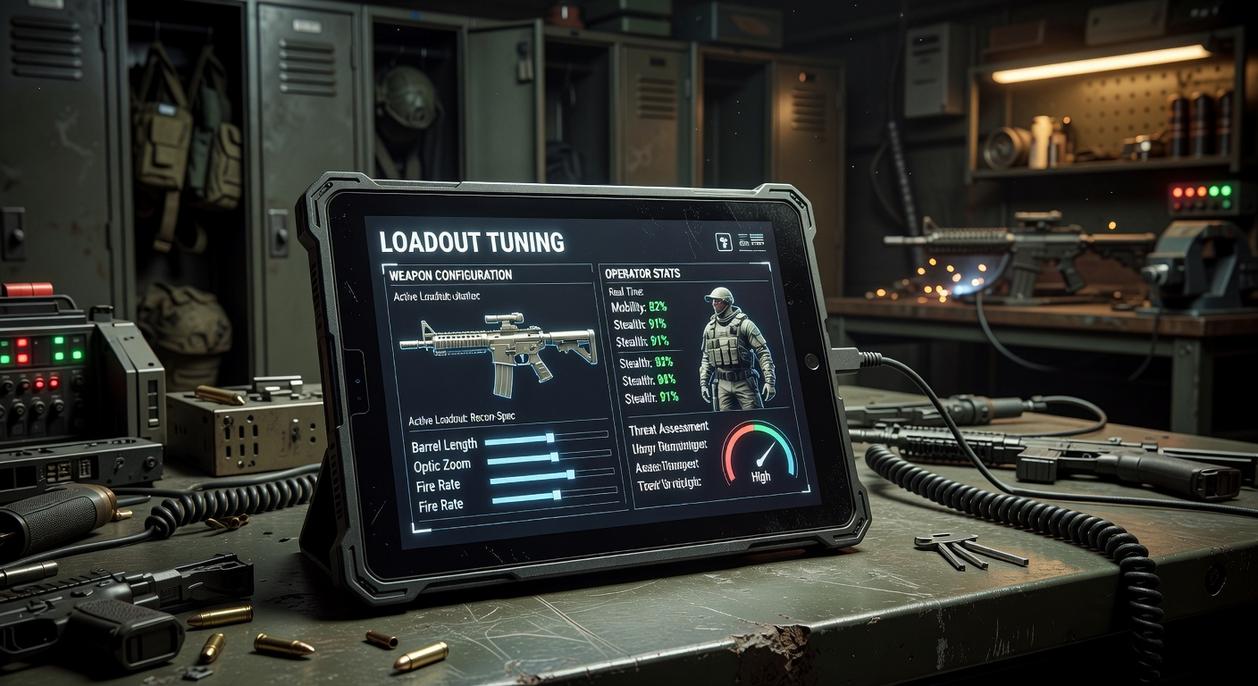
First, stop copying the meta blindly. While pro loadouts dominate highlight reels, data from ranked ladder analyses show team win rates increase by up to 18% when roles are clearly defined and equipped accordingly (Esports Charts, 2024). An entry fragger needs high-mobility weapons for first contact; meanwhile, a support player benefits more from utility-heavy builds that sustain map control. That’s fps loadout optimization in practice.
However, some argue meta picks are statistically safest. True—but only in coordinated pro environments. In everyday competitive play, synergy beats popularity.
Equally important, every smoke, flash, or grenade must serve a purpose: take space, deny information, flush an angle, or enable a teammate. For example, smoke Heaven, flash close left, then swing together (simple, but devastatingly effective). Random utility? That’s just expensive confetti.
Lasting improvement in competitive games isn’t about polishing one trick until it shines; it’s about building a engine. Mechanics are the horsepower, positioning is the steering, and game sense is the GPS guiding decision. On own, each matters. Together, they create momentum.
If you’ve hit a plateau, think of it as a checkpoint, not a wall. It’s a signal that your system needs tuning, not that your talent has expired.
This framework—mechanics, positioning, and awareness—works across maps and modes, like fps loadout optimization adapts to fights.
Next session, choose one area and train it deliberately. Stack upgrades. Build your machine.
Lock In Your Competitive Edge
You came here to sharpen your edge and gain a clearer understanding of the mechanics, strategies, and decisions that separate average players from dominant ones. Now you have the framework to improve your positioning, coordination, and decision-making under pressure.
The truth is, most players stay stuck because their mechanics are inconsistent, their squad synergy is weak, and their setups aren’t built for their playstyle. That frustration of losing winnable fights or underperforming in ranked matches doesn’t have to continue.
Mastering fps loadout optimization, refining your role within a squad, and applying high-level tactical adjustments will immediately elevate your impact in every match.
If you’re serious about climbing the ranks and outplaying tougher opponents, start implementing these strategies in your next session. Study your loadouts, coordinate with intention, and practice with purpose. Join thousands of competitive players who rely on our expert breakdowns and proven strategies—then get back in the game and put it all into action today.