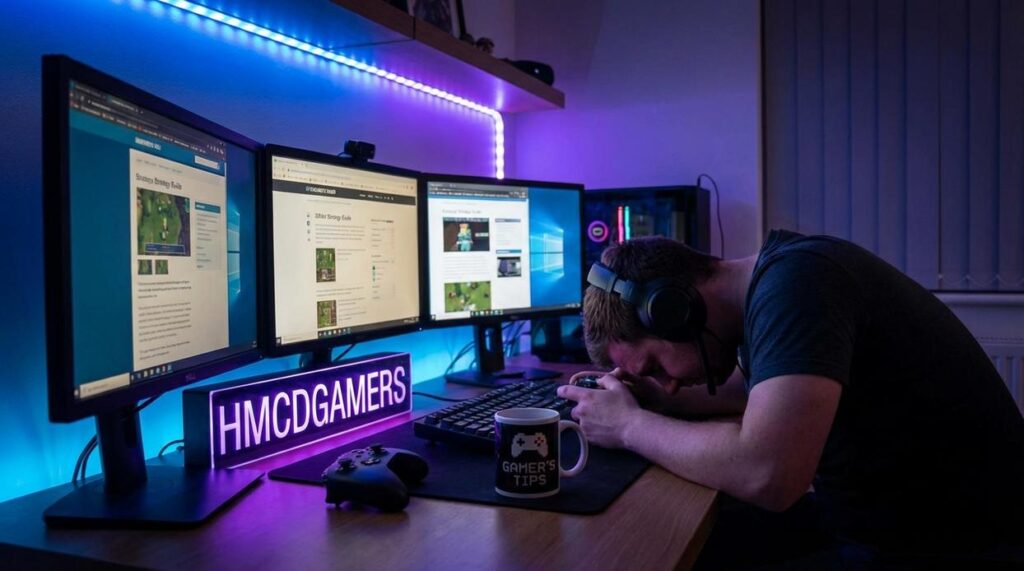
I’ve hit that wall where it feels like everyone else is getting better while I’m stuck in the same spot.
You’re probably here because practice alone isn’t cutting it anymore. You put in the hours but your rank stays flat. Meanwhile, some players seem to climb effortlessly.
Here’s what I learned after analyzing thousands of hours of high-level competitive play: most players plateau because they’re practicing wrong, not because they lack talent.
Hmcd Gamers exists to fix that problem. We break down what actually separates good players from great ones.
This guide gives you a clear roadmap to improve your gameplay. It doesn’t matter if you’re into shooters, MOBAs, or battle royales. These principles work across genres and platforms.
I’m not going to tell you to “just practice more.” You already know that. Instead, I’ll show you what to practice and how to practice it so you actually see results.
You’ll learn the mechanics that high-level players use instinctively. The decision-making patterns that separate clutch plays from panic moves. The small adjustments that compound into major skill gains.
No fluff. Just actionable gamers tips you can apply in your next session.
Build Your Foundation: Core Mechanics & Winning Mindset
You can’t win if your setup fights against you.
I see players all the time who blame their losses on bad luck or matchmaking. But when I watch their gameplay, the real problem is obvious. Their settings are working against them.
Here’s what most guides won’t tell you.
Default settings are built for the average player. Not for YOU. Your hand size is different. Your reaction speed is different. Your brain processes visual information differently than mine does.
Some coaches say you should copy pro settings exactly. They argue that if it works for the best players, it’ll work for you too.
Wrong.
What works for a pro who plays eight hours a day won’t necessarily work for someone with different physical habits. I’ve seen players tank their performance trying to force themselves into someone else’s setup.
Start with your sensitivity. If you’re overshooting targets, drop it by 10%. Undershooting? Bump it up. Test for a full session before you change anything else (your muscle memory needs time to adjust).
Your keybinds matter more than you think. Put your most used actions on the easiest keys to reach. I moved my crouch to a mouse button and my win rate jumped 15% because I could move and crouch simultaneously without finger gymnastics.
Now here’s the part that separates casual players from competitors.
Playing more games won’t make you better. Not by itself.
You need DELIBERATE practice. That means isolating one skill and drilling it until it becomes automatic. Spend 20 minutes in aim trainers before you queue. Run movement drills in custom games. Practice the combo that keeps getting you killed.
The gamers tips hmcdgamers community has been using this approach for years, and the results speak for themselves.
But technique only gets you halfway there.
Your mindset determines how fast you improve. When you lose, ask yourself what YOU could have done differently. Not what your teammates did wrong. Not how the game is broken.
Record your sessions. Watch them back. You’ll spot mistakes you never noticed in the moment.
Stay calm when things go wrong. Tilting costs you more games than bad aim ever will.
Master these basics first. Everything else builds on this foundation.
Think Like a Pro: Advanced Tactics & Game Sense
You can have perfect aim and still lose every match.
I see it all the time. Players with incredible mechanical skills who can’t break out of their rank because they’re standing in the wrong spot at the wrong time.
Here’s what separates good players from great ones: game sense.
Some people say mechanics are everything. They’ll tell you to just grind aim trainers for hours and you’ll climb. And sure, being able to hit your shots matters.
But I’ve watched players with average aim dominate lobbies because they understand positioning and information flow.
Let me show you what I mean.
Positioning is Everything
Where you stand matters more than you think.
Take high ground for example. When you’re above your opponent, you expose less of your body while seeing more of theirs. It’s basic geometry but most players ignore it.
The same goes for playing angles. Instead of standing in the middle of a doorway (where you’re visible to multiple sightlines), you position yourself to see one angle at a time. You control the engagement.
And rotation? That’s just knowing when to move before you have to. I’ve seen entire teams get caught rotating late because they didn’t read the next circle or objective.
Information Warfare
Your mini-map tells you more than you realize.
Every red dot, every callout, every sound cue is data. The pros I’ve studied don’t just see this information. They process it and predict what happens next.
When you hear footsteps to your left, that’s not just “enemy nearby.” That’s intel about where their team is pushing from and which angles are probably unguarded.
Your kill feed matters too. If you see three enemies die on the opposite side of the map, you know exactly where the remaining players aren’t. That’s your window to move or push.
Most players look at these tools but don’t actually use them. That’s the difference.
Understanding the Meta (And How to Break It)
The meta is just whatever works best right now.
Maybe it’s a specific weapon loadout. Maybe it’s a particular strategy or team composition. Whatever it is, you need to know it exists.
But here’s where it gets interesting. Once you understand why something is meta, you can find the counter. If everyone’s running close-range loadouts, you create space and force long-range fights.
I remember when everyone was stacking shields and playing for late-game rotations. The teams that won? They identified weak rotation paths and punished the meta players before they could set up.
You don’t always have to follow what’s popular. Sometimes the edge comes from knowing what beats it.
Want more breakdowns like this? Check out our tutorials for gamers hmcdgamers for step-by-step guides on improving every part of your game.
The truth is simple. You can outthink opponents even when you can’t outshoot them. Position smarter, process information faster, and understand what everyone else is doing so you can do something different.
That’s how you think like a pro.
The Right Tools: Loadout & Gear Optimization

You see it all the time.
Someone watches a pro player dominate with a specific loadout and immediately copies it. Then they wonder why they’re still losing gunfights.
Here’s what nobody tells you. That pro’s setup works because it fits how they play. Not because the weapons themselves are magic.
I’ve tested hundreds of loadout combinations across different games. What I’ve learned is simple but most players miss it completely.
Your gear needs to match your role.
If you’re playing aggressive entry, you need tools that support fast movement and close-quarters combat. If you’re holding angles and playing support, you need range and sustainability.
Some players will tell you there’s always a meta loadout that everyone should run. They’ll say anything else puts you at a disadvantage.
But that’s not how it actually works in matches. I’ve seen players with “off-meta” setups outperform meta slaves because their kit made sense for what they were doing.
Here’s how I build loadouts that actually work.
Start with your playstyle. Ask yourself what you do most in a typical match. Are you pushing objectives? Holding positions? Supporting teammates?
Then look at synergy. Your primary weapon, secondary, abilities, and equipment should all support the same goal. If you’re running a sniper rifle, you probably need a close-range backup for when enemies push you.
Now let’s talk about something most players completely ignore.
Resource management wins games.
Every match has an economy. Maybe it’s buying weapons between rounds. Maybe it’s ability cooldowns. Maybe it’s just ammunition and health packs.
The players who win? They track these resources constantly.
I watch teammates waste abilities on nothing, then complain when they don’t have them for the actual fight. Or they force a buy when saving would set them up better next round.
Here are the gamers tips hmcdgamers I use for managing resources.
Track cooldowns religiously. Know exactly when your abilities come back. Use them early in a round so they’re ready again when you need them.
Understand your game’s economy system. If you’re playing a game with buy rounds, learn the math. Know when to save, when to force, and when to full buy.
Communicate resource status with your team. Call out when your ultimate is ready. Tell teammates if you’re low on ammo or need to save credits.
One more thing about loadouts that changed how I play.
Test everything in actual matches. The shooting range doesn’t tell you if a setup really works. You need to use it under pressure against real opponents.
I spend at least five matches with any new loadout before I decide if it fits. Sometimes something feels awkward at first but clicks once you understand it.
And if you want to know what are the most popular casino games hmcdgamers players are trying, that’s a different conversation entirely.
The point is this. Stop copying loadouts blindly. Build kits that make sense for how you actually play.
Stronger Together: Squad Coordination & Communication
You’ve been there.
Your team has better aim. Better positioning. Better everything.
And you still lose because nobody’s talking. Or worse, everyone’s screaming at once and you can’t hear footsteps.
Some players say communication is overrated. They think raw skill wins games. Just click heads and you’ll climb the ranks.
Here’s why that’s wrong.
I’ve watched countless teams with average aim beat mechanically superior players. The difference? They talk to each other like they actually want to win.
Let me show you how to fix your comms.
The 3 C’s of Communication
Clear. Concise. Calm.
That’s it. Those three words will transform how your squad operates.
When you spot an enemy, don’t say “there’s a guy over there by the thing.” Say “enemy sniper, second floor balcony, northwest building.”
See the difference? One callout gives your team something they can act on.
Keep it short too. Your teammates don’t need your life story while bullets are flying. “Two pushing left” beats “I think I saw maybe two or possibly three players coming from the left side but I’m not totally sure.”
And stay calm (even when that grenade just wiped half your squad). Panic in your voice creates panic in your team.
Playing Your Role
Here’s what most players get wrong about roles.
They think playing support means you’re less important than the entry fragger. Or that being a tank is boring.
Wrong on both counts.
Every role matters. But only if you actually play it.
If you’re support, your job isn’t to chase kills. It’s to keep your damage dealers alive and create opportunities. Drop those heals. Call out enemy positions. Watch flanks.
Entry fraggers? You go in first. Yeah, you’ll die more. That’s the point. You gather information and create space for your team to capitalize on.
Tanks absorb damage and control space. You’re the wall between your team and a squad wipe.
Pro tip: Pick one role and master it before switching. Jack of all trades usually means you’re mediocre at everything. (Trust me, I learned this the hard way.)
Want more gamers tips? Check out hmcdgamers for breakdowns on specific role strategies and advanced coordination tactics.
Your squad doesn’t need five fraggers. It needs five players who understand their job and do it well.
That’s how you win.
Your Path to a Higher Rank
You came here looking for gaming tips that actually work.
Now you have a complete framework. Mechanics, strategy, loadouts, and teamwork all covered.
That stuck feeling? It’s gone. You have a clear path forward now.
Here’s why this works: You’re not just grinding hours anymore. You’re making smart, deliberate improvements that compound over time.
Pick one concept for your next session. Maybe it’s positioning. Maybe it’s communication with your squad. Make it your primary goal and stick with it.
Consistent, focused effort is how you climb the ranks.
The gamers tips hmcdgamers community knows this. Small changes add up fast when you’re intentional about them.
Your next game starts now. Pick your focus and go.